The churches
Saint-Germain-des-Prés: the painted nave and the old tower
What stands behind the concert on the Left Bank: a bell tower begun around 990, a 12th-century consecration and a nave painted by Flandrin.
Choose a date ↗Quick answer
Saint-Germain-des-Prés began as a Benedictine abbey church in the 6th century. Its bell tower, begun in 990, is the only one of three original towers still standing, and the church was consecrated in 1163. The painted decoration inside dates from the 19th century and is the work of Hippolyte Flandrin. It is one of the three settings for the concert.
A church that began as an abbey
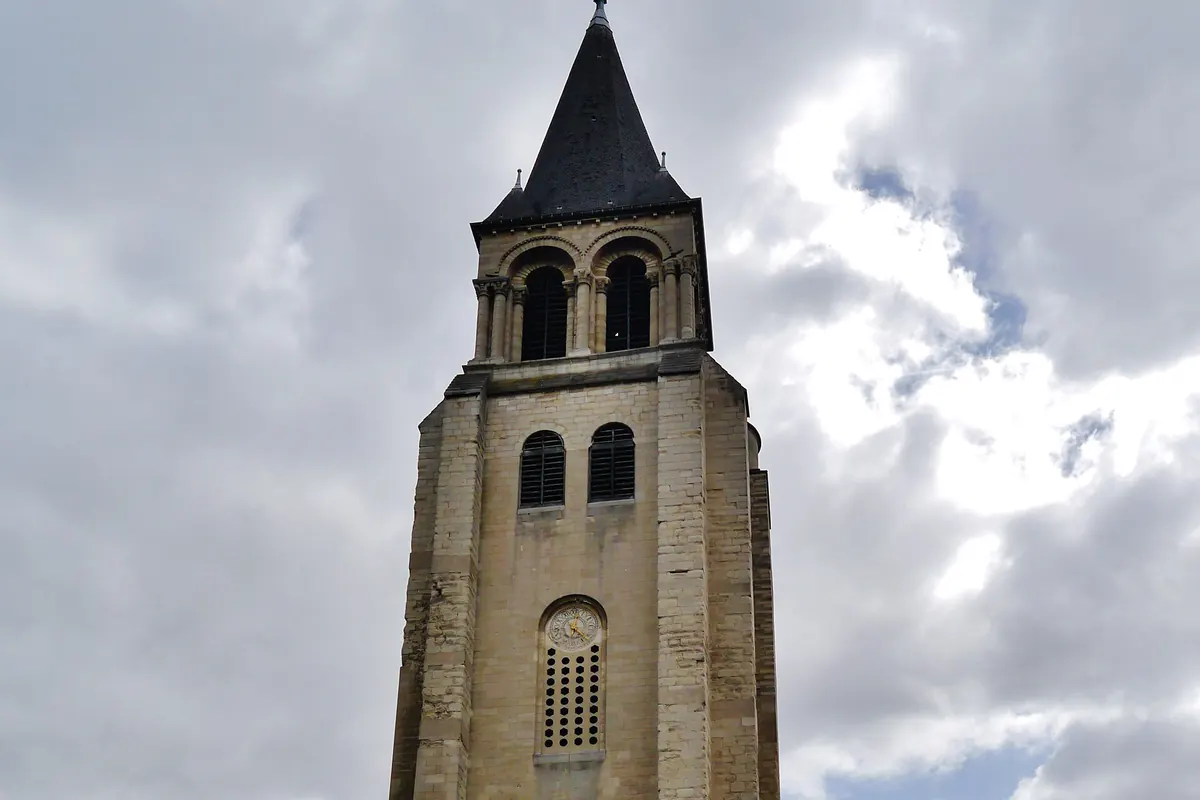
Wikipedia says the abbey was founded in the 6th century by Childebert I, a son of Clovis. Sources disagree on the exact year: the English article gives 558 in one place, and a quoted interview on the City of Paris website says 543. For that reason this guide says only the 6th century. It was a Benedictine house until the Revolution, after which the monastery became a parish, and the buildings were badly damaged along the way.
The tower and the nave
Wikipedia dates the bell tower to work begun in 990 and says it is the only one of the church's three original towers that remains. The rebuilt church was consecrated by Pope Alexander III on 21 April 1163, according to the same article. The article is not wholly consistent about the nave, saying in one place it dates from the 10th century and elsewhere that its upper levels are Gothic with rib vaults added in the 17th century, so treat the nave as a layered building.
The painted decoration
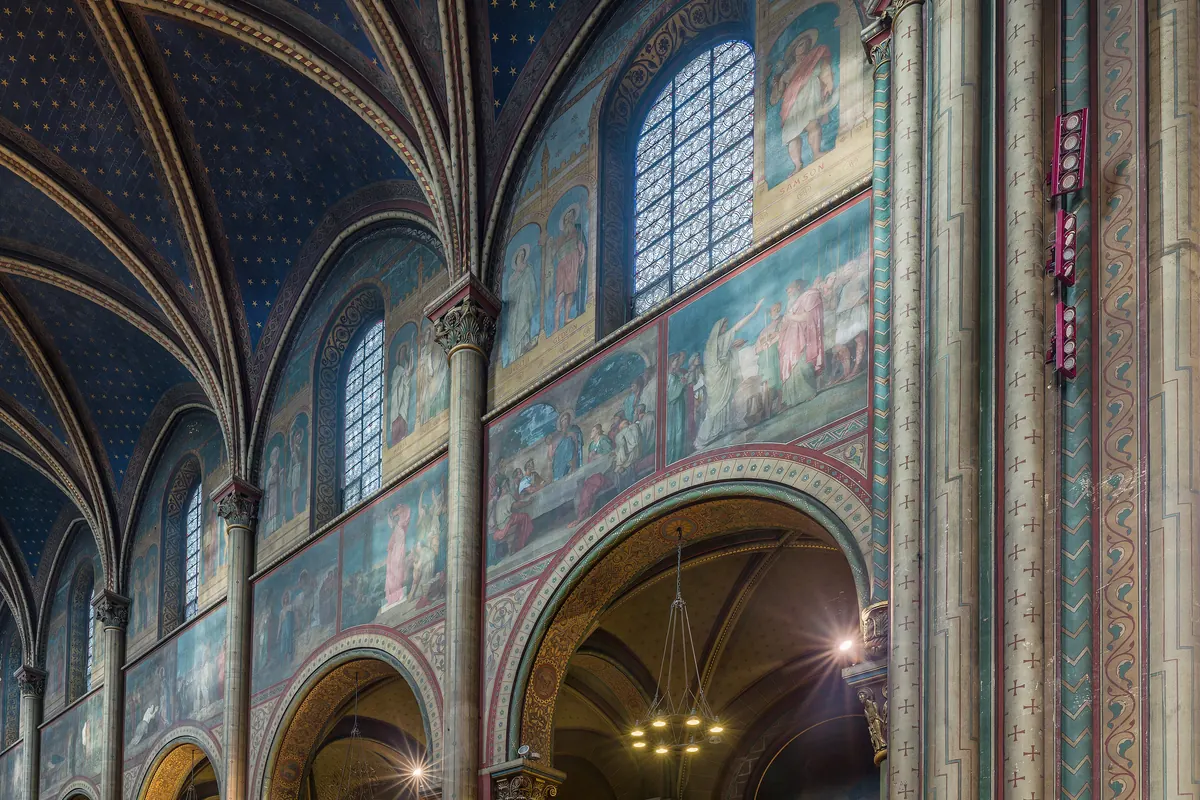
The walls and vaults are painted. Wikipedia credits Hippolyte Flandrin, who lived from 1809 to 1864, with the scheme: about twenty murals in the sanctuary, choir and nave, showing Old Testament scenes that prefigure the New Testament. The City of Paris says he was a disciple of Ingres and used innovative wax-painting techniques. Dates differ between sources, from 1840 to the 1850s, so only the 19th century is stated here.
Restored colour
The City of Paris says a major restoration ran between 2017 and 2020, with later phases funded by private patronage. The work included cleaning or refixing the 19th-century stained glass, treating corrosion and restoring the wooden furniture. The church stayed open for worship while it was done. The result is why the blues and golds in photographs look so fresh.
Who is buried here
Wikipedia lists Childebert I, Germain of Paris and several Merovingian rulers among those buried at the abbey, and later René Descartes, whose tomb is in a side chapel, and Nicolas Boileau-Despréaux. These are background for a visit rather than part of the concert, and the booking page does not offer a tour. If you want to see the tombs, plan time before or after, within whatever hours the church keeps.
The organ above the entrance
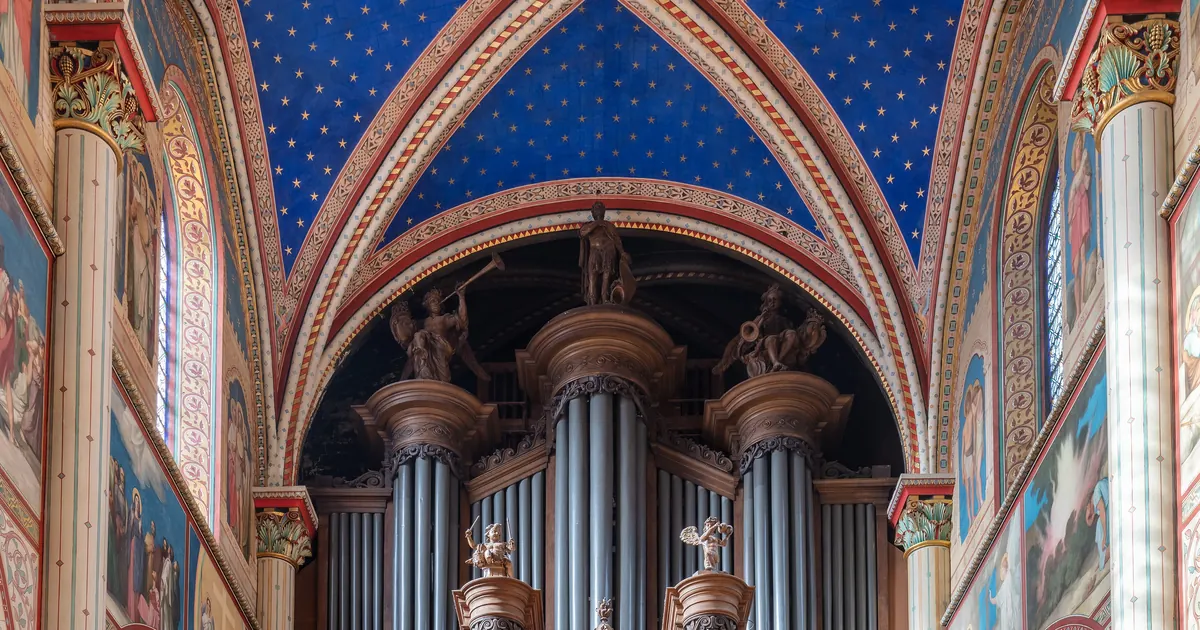
Wikipedia says the organ in the tribune over the nave entrance was built by Haerpfer-Erman in 1973 and Fossaert in 2004 to 2005, and that its case towers carry 17th-century sculpture by Matthieu Lespagnandelle that came from the abbey church of Saint-Victor. Whether the organ is used depends on the programme, and the booking page does not say. It is part of what you see from the nave.
What it is like for a concert
A medieval nave with a high painted vault is a lively room for sound. The booking page calls Saint-Germain-des-Prés an outstanding temple of medieval origin and places the concert in the central nave. Beyond that, no source quoted here describes seating, so read your confirmation for entry details. As in the other churches, plan to arrive about 30 minutes early, and do not bring food or drink.
Getting your bearings
The church stands in the 6th arrondissement, in the district that shares its name. The booking page gives no street directions or walking times, and none are invented here. The meeting point comes with your confirmation. If you arrive early, the square outside is a place to wait, and the tower is the landmark to look for.
Who this isn't for
A medieval church with a painted vault is not a modern concert hall. If you want a quiet, clear acoustic for fast music, you may prefer to hear that on a recording. If you want a comfortable, padded seat, the booking page does not promise one.
Read next: Are the classical concerts in Paris churches worth it?
Frequently asked questions
When was Saint-Germain-des-Prés founded?
In the 6th century, as a Benedictine abbey. Sources give different years, so only the century is stated here.
Which parts are medieval?
The bell tower, begun in 990, and the consecrated church of 1163 are the medieval anchors.
Sources